
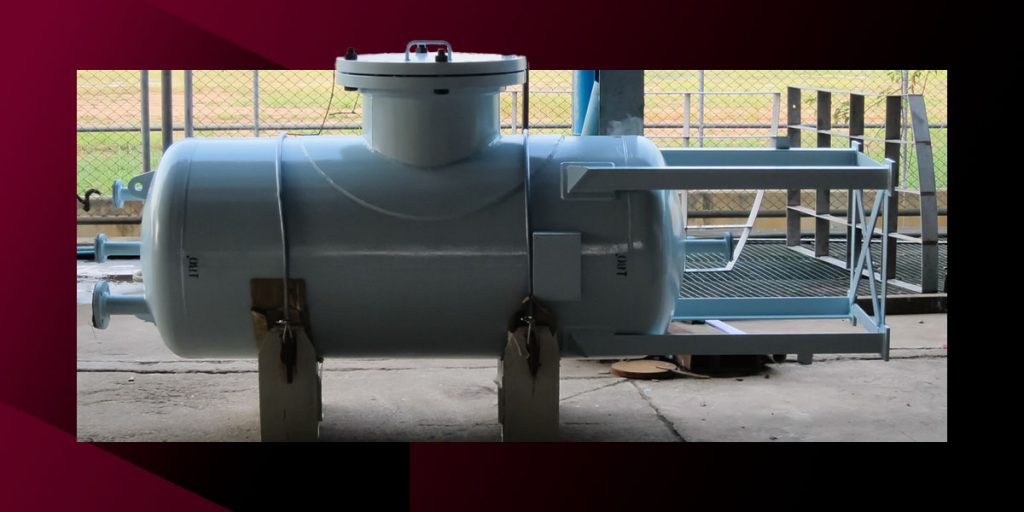
Custom vessel pricing depends on materials/alloys and wall thickness (driven by pressure/temperature), required code compliance (e.g., ASME stamp, third‑party inspection, documentation), and fabrication complexity (nozzle count, head type, tolerances, special welds/PWHT). Added cost levers include NDE/testing (RT/UT/PT/MT, hydro/helium), surface finishes/linings, engineering/calcs and drawing package, quantity and lead‑time/expedite, and shipping/installation considerations. There isn’t a single “average” price—the spec drives the quote.
When engineers and purchasing teams start researching custom pressure vessels, understanding the investment involved can be surprising. A vessel that looks similar to a standard tank can carry a price tag that is several times higher, with lead times that stretch far longer than expected. Explaining that gap to internal stakeholders can be challenging.
The key challenge is that custom pressure vessels don’t have a true “average” price in the way off-the-shelf equipment does. Each vessel is engineered for a specific application, with costs shaped by pressure requirements, materials, compliance obligations and the level of risk the system must manage over its lifespan. So, what initially seems like a simple question about price really opens the door to important design considerations and a commitment to quality.
This article explores what the average cost of custom pressure vessels is and the factors that influence them.
The Average Cost of Custom Pressure Vessels
There is no one standard price for custom pressure vessels. A basic, low-pressure carbon steel vessel with minimal testing and documentation might cost just a few thousand dollars. In contrast, a high-pressure, code-certified vessel with specialized materials and extensive inspection can cost tens of thousands, and even more. The true value lies not in focusing on the “average” price, but in understanding the factors that influence it. Costs fluctuate based on the amount of engineering required, the applicable codes and certifications, the complexity of the fabrication, and the volatility of material pricing at the time of purchase. Understanding these drivers makes it easier to evaluate quotes side by side and explain why one proposal may be higher than another, even when the vessels appear similar on paper.Understanding Key Cost Drivers
| Driver | What it includes | How it affects cost |
|---|---|---|
| Compliance & certification | Code stamps, inspection coordination, formal documentation; e.g., ASME involvement | Adds time, specialized labor, and administrative effort; ensures defined design/quality standards |
| Engineering & design workload | Calculations, drawings, nozzle design, multidisciplinary reviews | Project‑specific effort that scales with complexity and pressure |
| Fabrication complexity & labor | Thicker materials, tighter tolerances, specialized weld procedures, stringent inspection | Increases skilled labor hours and inspection scope |
| Material pricing & availability | Selected alloys and market conditions at time of quote | Introduces variability; quotes are often time‑limited |
1. Compliance and Certification Requirements
Pressure vessels that must meet recognized codes and certifications require more than fabrication alone. Code stamps, inspection coordination and formal documentation all demand controlled processes and third-party oversight. For example, some vessels are inspected and documented by the authorized American Society of Mechanical Engineers (ASME), which contributes to the good operation of pressure vessels. These requirements add time, specialized labor and administrative effort, but they also ensure the vessel meets defined design and quality standards.2. Engineering and Design Workload
Custom vessels often require original calculations, drawings and design reviews before fabrication can begin. This engineering work can include pressure calculations, nozzle design and coordination between disciplines to ensure the vessel performs as intended. Since this effort is unique to each project, it becomes a meaningful part of the total cost, especially for complex or high-pressure designs.3. Fabrication Complexity and Labor Intensity
As vessel designs become more complex, the number of hours required for fabrication increases. Thicker materials, tighter tolerances, specialized weld procedures and stringent inspection requirements all add skilled labor time. These factors directly influence cost.4. Material Pricing and Availability
Material selection and market conditions also play a role in determining the final price. This variability is why quotes are often time-limited and why material-heavy designers can carry greater cost variability.Review Materials and Design Choices That Can Raise or Reduce Costs
| Factor | Effect on pricing | Why | Notes |
|---|---|---|---|
| Pressure, temperature, wall thickness | Tends to increase with higher requirements | Greater thickness adds material weight, welding time, and inspection | High temperatures add design and testing considerations |
| Design pressure vs. MAWP | Specs drive engineering and inspection scope | MAWP is set below design pressure to provide margin | Misunderstanding can confuse quotes and comparisons |
| Materials & corrosion resistance | Upgrading alloys increases cost | Environment may require stainless or higher‑alloy materials | Also affects fabrication effort |
Pressure, Temperature and Wall Thickness
As required pressure increases, wall thickness typically increases as well, which adds material weight, welding time and inspection effort. Higher temperatures can also introduce additional design considerations, such as material performance limitations and thermal stress, which further affect fabrication and testing requirements.Design Pressure vs. Maximum Allowable Working Pressure (MAWP)
Design pressure and MAWP are related but not the same. Design pressure represents the theoretical maximum pressure used during the engineering process, while MAWP is the highest pressure the vessel is permitted to reach during normal operation. MAWP is set below design pressure to provide an operating margin, and misunderstanding this distinction can lead to confusion when reviewing specifications or comparing quotes.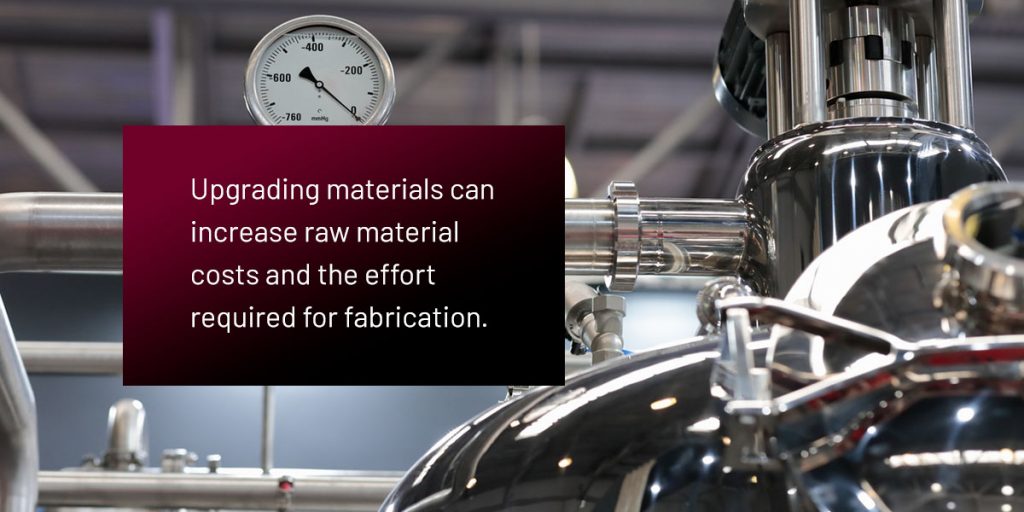
Materials and Corrosion Considerations
Material choice has a direct and immediate effect on cost. Certain environments require stainless steel or higher-alloy materials to address corrosion, temperature or compatibility concerns. Upgrading materials can increase raw material costs and the effort required for fabrication.How to Budget Smarter and Avoid Cost Surprises
Budgeting for a custom pressure vessel is much easier when expectations are aligned early. Clear information, realistic timelines and a careful review of quotes all play a role in preventing cost overruns and last-minute changes that disrupt projects. The following tips can help you plan better for your projects:- Provide complete technical specifications in the beginning: Clear details such as MAWP, temperature range and dimensions can reduce assumptions and help fabricators avoid adding unnecessary contingency to your quote.
- Account for installation and operating conditions: Factors like outdoor exposure and mounting orientation can change design thickness and fabrication effort, which directly impact cost and lead time.
- Engage early in the design process: Early collaboration allows engineering teams to identify cost-saving design adjustments before specifications are locked, reducing the likelihood of rework and unplanned expense.
Frequently Asked Questions
Get your pressing questions on custom pressure vessels answered.1. What Is the Average Cost of Custom Pressure Vessels?
There is no single average price because custom pressure vessels are engineered for specific applications. Costs can vary widely, from a few hundred dollars to tens of thousands and even more. This range is based on pressure requirements, materials, compliance obligations and inspection needs.2. What Information Is Needed to Get an Accurate Quote?
Accurate quotes typically require details such as maximum allowable working pressure, temperature range, service media, dimensions, applicable codes and inspection requirements. Installation environment and schedule expectations also help refine pricing.| Item | Details to include | Why it helps |
|---|---|---|
| Pressure & temperature | MAWP and temperature range | Drives thickness, materials, and testing |
| Service media | Fluid/gas characteristics and compatibility | Informs material selection |
| Dimensions | Envelope, wall thickness targets, nozzle needs | Establishes material and labor scope |
| Codes & inspections | Applicable codes and inspection requirements | Sets compliance workload and documentation |
| Environment & schedule | Installation conditions and timeline expectations | Aligns design, lead time, and pricing |
3. How Can Custom Pressure Vessel Costs Be Reduced Without Increasing Risk?
Engaging early in the design process, providing complete specifications and allowing realistic lead times can help control costs. Thoughtful material selection and clear performance requirements may also reduce the likelihood of late changes and rework, which can be costly.
Request a Transparent Quote From BEPeterson
By focusing on what drives the investment, rather than searching for a single average price, you can budget more accurately and communicate expectations with confidence. Custom pressure vessels are long-term assets, and taking the time to understand their true cost structure helps protect both project outcomes and operational reliability.
If you’re planning a custom pressure vessel and need support navigating important aspects such as engineering requirements, compliance and pricing, BEPeterson provides engineered solutions backed by experience, disciplined quality programs and transparent communication.
Our qualified engineers, inspectors and welders can cater to any industrial equipment requirement. Request a quote today and find the right custom pressure vessels for your project’s specific needs.