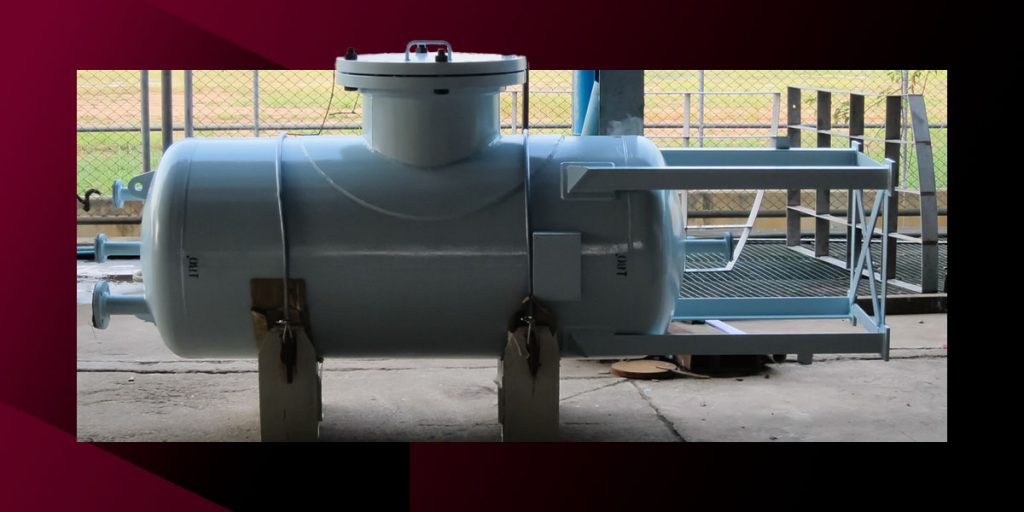
Pressure Vessels

What Is the Average Cost of Custom Pressure Vessels?

Quick answer Custom vessel pricing depends on materials/alloys and wall thickness (driven by pressure/temperature), required code compliance (e.g., ASME stamp, third‑party inspection, documentation), and fabrication complexity (nozzle count, head type, tolerances, special welds/PWHT). Added cost levers include NDE/testing (RT/UT/PT/MT, hydro/helium), surface finishes/linings, engineering/calcs and drawing package, quantity and lead‑time/expedite, and shipping/installation considerations. There isn’t a […]

What Is the Average Cost of Custom Pressure Vessels? Read More »
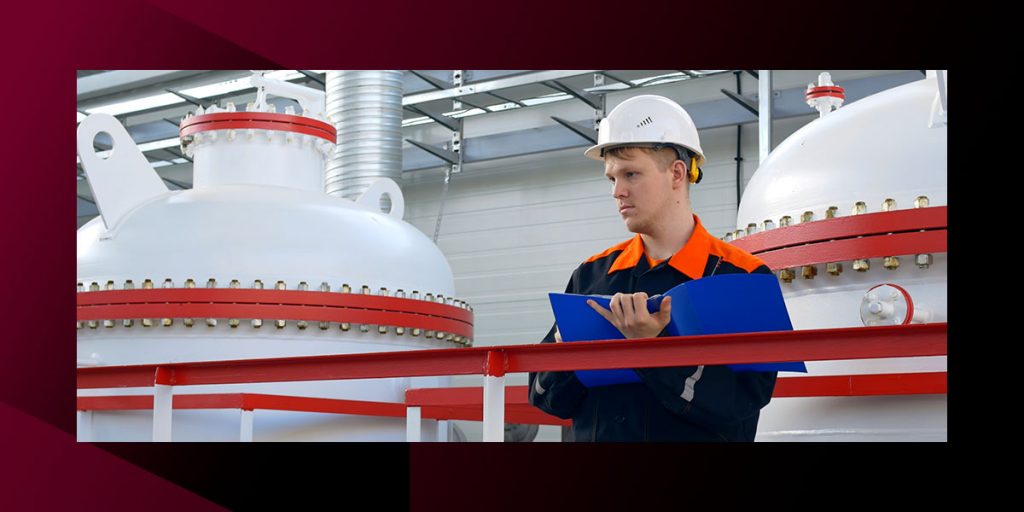
A Guide to Pressure Vessel Inspection and Maintenance

Quick answer A solid pressure‑vessel program schedules external and internal inspections, applies targeted NDE (UT, RT, PT, MT), and performs periodic proof tests—hydrostatic preferred; pneumatic only with strict controls. Keep complete inspection logs, test certificates, and repair records, and correct corrosion or wear promptly to remain ASME/OSHA compliant, reduce risk, and prevent unplanned downtime. Pressure

A Guide to Pressure Vessel Inspection and Maintenance Read More »

Ensuring the Quality of Steel Plates in Pressure Vessels

Quick answer We ensure pressure‑vessel steel plate quality by sourcing fully‑killed, fine‑grain plate in the required thickness range (≈14 ga to 2 in) and maintaining full MTR heat traceability—validated with spot PMI. Fabrication is controlled under ASME/AWS procedures with a staff CWI, and delivered from an ISO‑certified operation with recognized approvals (e.g., TÜV/ABS/National Board), so chemical/mechanical properties

Ensuring the Quality of Steel Plates in Pressure Vessels Read More »

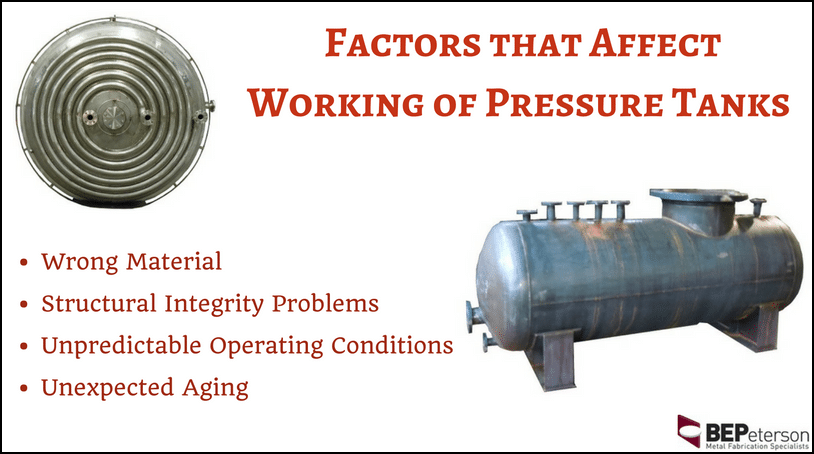
Factors That Affect Working of Pressure Vessels

Quick answer Pressure‑vessel performance is driven by correct material selection (spec‑compliant, traceable plate), fabrication quality (sound welds with proper inspection), and actual operating conditions versus the design—chemistry, pH, temperature, and pressure cycles that can accelerate corrosion, cracking, and fatigue. Robust NDE/testing and disciplined maintenance reduce unexpected aging and extend safe service life. Pressure tanks are

Factors That Affect Working of Pressure Vessels Read More »

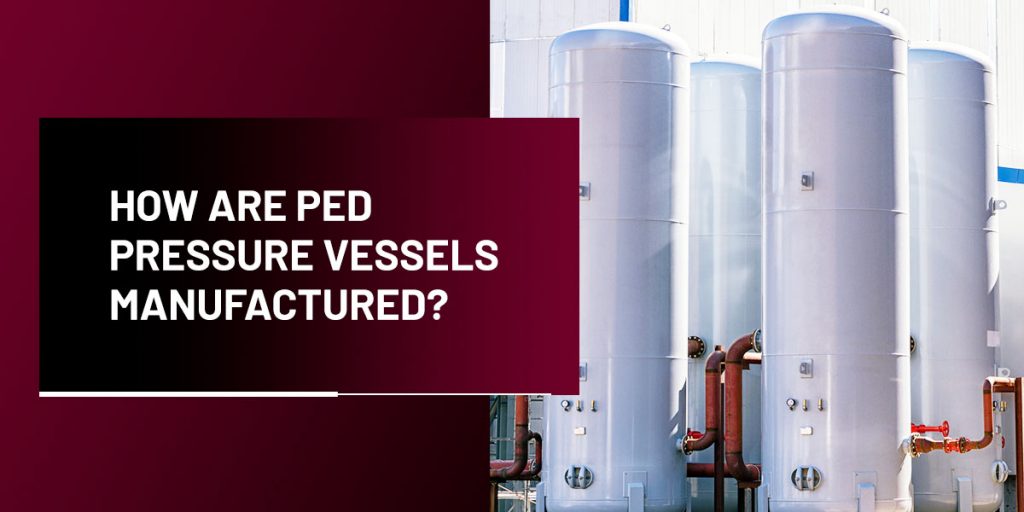
How are PED Pressure Vessels Manufactured?

Quick answer PED pressure vessels are engineered to the Directive’s Essential Safety Requirements, then formed (rolling/pressing/spinning), welded with qualified procedures, and PWHT if required. Materials remain traceable; joints receive targeted NDE (RT/UT/PT/MT), and vessels are hydro‑tested. A Notified Body validates the chosen Category/Module, after which the vessel is CE‑marked, issued a Declaration of Conformity and

How are PED Pressure Vessels Manufactured? Read More »

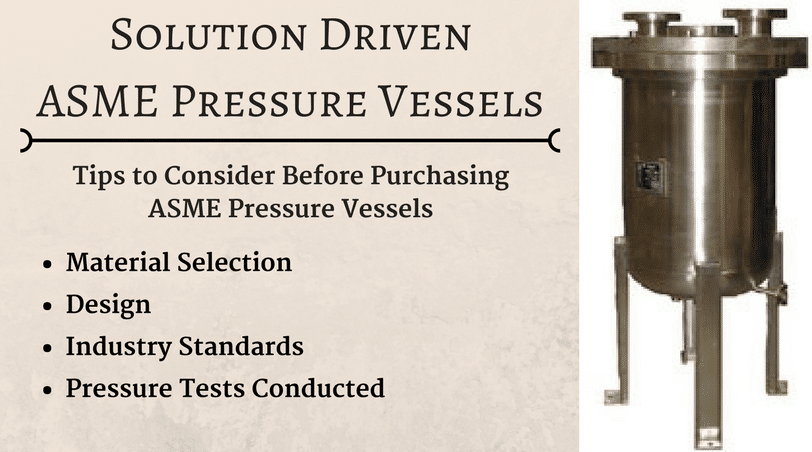
4 Tips to consider Before Purchasing ASME Pressure Vessels

Quick answer Before purchasing an ASME pressure vessel, lock down your application/specs (media, MAWP, temperature, corrosion allowance) and select the right materials (carbon/stainless/ni alloys or linings). Require an ASME Section VIII design with proper weld construction and the needed code stamps (U/R/S/UM) plus relevant certifications (ISO 9001, TUV/PED/CRN if applicable). Define testing/NDE and documentation in the

4 Tips to consider Before Purchasing ASME Pressure Vessels Read More »

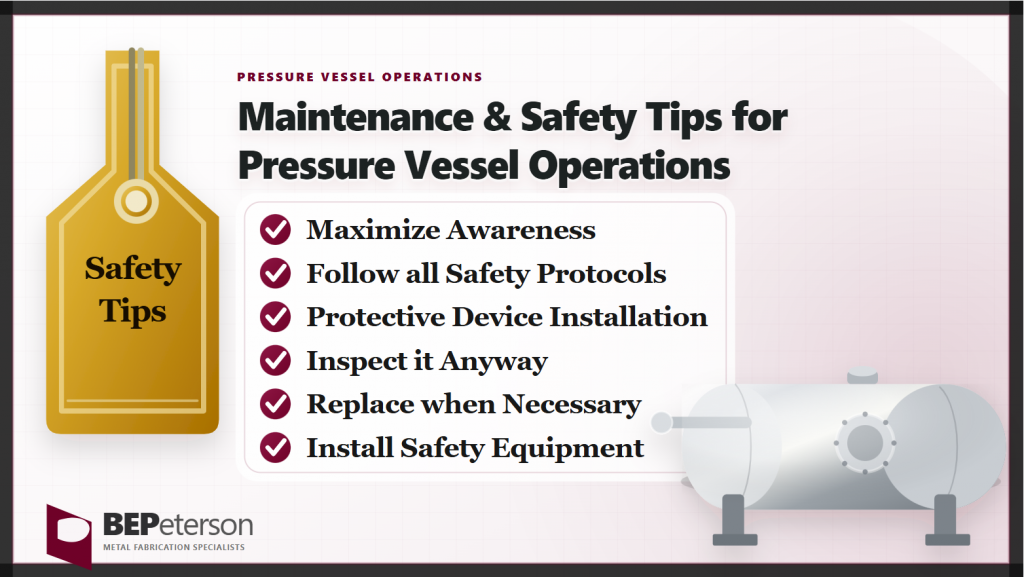
6 Maintenance and Safety Tips for Pressure Vessels Operation

Quick answerKeep pressure‑vessel operations safe by ensuring trained operators follow established protocols, fitting the vessel with properly adjusted protective/safety devices, and performing regular external/internal inspections with NDE as needed—even if it was checked recently. Maintain a clear replacement program for worn parts and connected equipment, and restrict safety‑device adjustments to authorized personnel. Pressure vessels are

6 Maintenance and Safety Tips for Pressure Vessels Operation Read More »

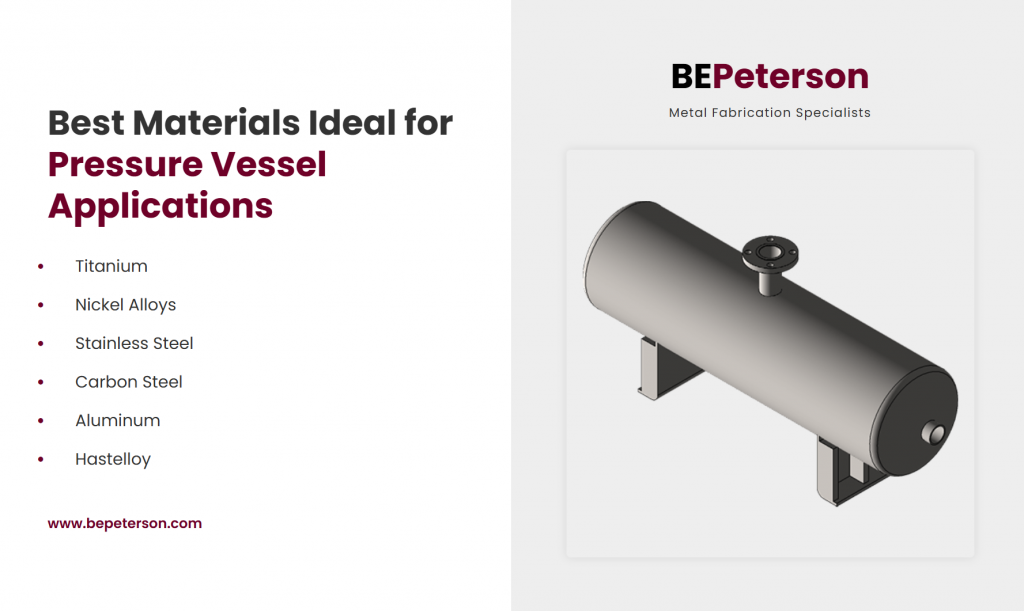
6 Best Materials Ideal for Pressure Vessel Applications

Quick answerThe best materials for pressure vessels are Titanium, Nickel Alloys (Inconel/Monel), Stainless Steel (304L/316L), Carbon Steel (SA‑516), Aluminum, and Hastelloy C‑276. Choose by service needs: titanium and nickel alloys for harsh media, stainless for general corrosion, carbon steel for value, aluminum for light/cryogenic, and Hastelloy for aggressive acids/chlorides. Pressure vessels are among the most

6 Best Materials Ideal for Pressure Vessel Applications Read More »

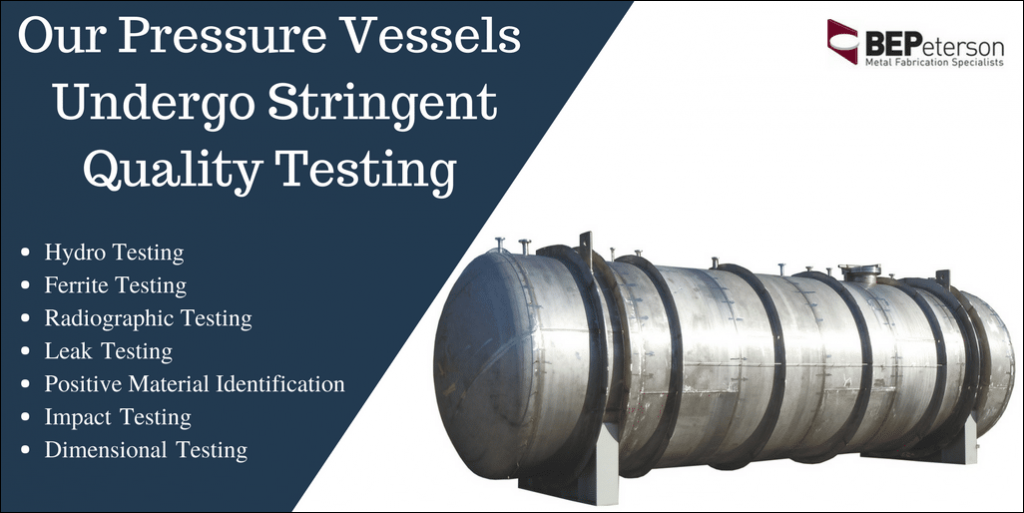
How are Pressure Vessels Tested for Quality at BEPeterson?

Quick answer At BEPeterson, pressure vessels are verified to ASME Section VIII (within an ISO 9001:2015 system) using hydrostatic testing (typically up to 1.5× MAWP) plus targeted NDE like RT of welds and optional UT/PT/MT. We add application‑specific checks—PMI, ferrite for stainless, dimensional CMM inspections, and leak testing where specified—under a staff CWI. Results and traceability

How are Pressure Vessels Tested for Quality at BEPeterson? Read More »

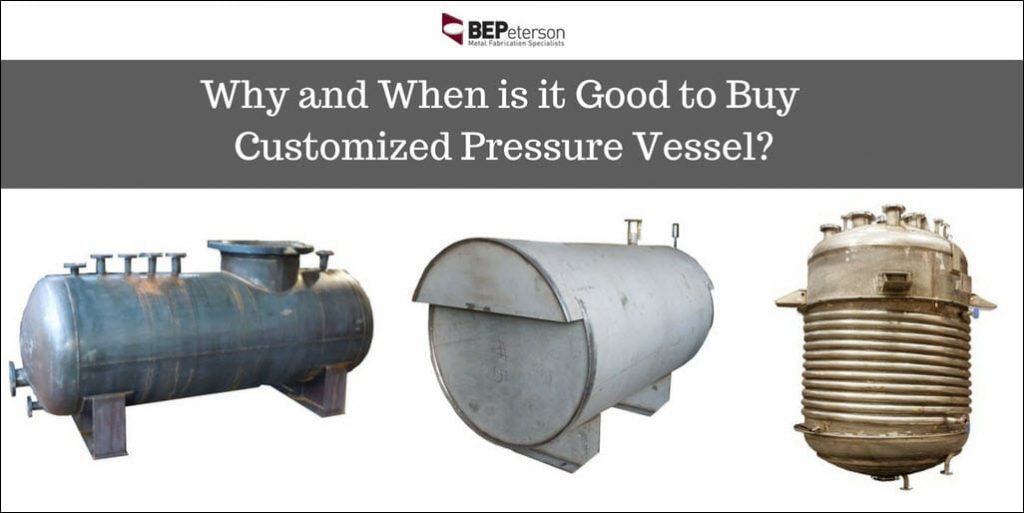
Why Choose Custom Pressure Vessels?

Quick answer Customized pressure vessels are preferred because they’re engineered to your exact process specs and site constraints—size, volume, nozzles, and footprint—while meeting the right codes (e.g., ASME, CRN, PED). You get the optimal material for media, temperature, and corrosion, seamless system integration, tailored NDE/testing and documentation, and better safety, reliability, and lifecycle cost than

Why Choose Custom Pressure Vessels? Read More »