
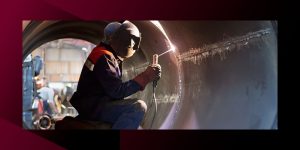
How to Prepare a Drawing and Spec Package for a Pressure Vessel RFQ?
Quick answer A complete pressure vessel RFQ package should include 1) design conditions: design pressure and MAWP, min/max operating temperatures, process media and ASME material
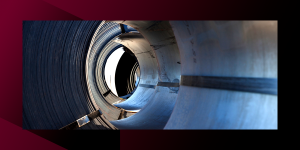
What NDE Methods Are Typical for Defense Pressure Vessels?
Quick answer The four typical NDE methods for defense pressure vessels are: Radiographic Testing (X-ray or gamma) to find internal weld flaws and create a
ASME Section VIII Div. 1 vs. Div. 2: Which Do You Need?
Quick answerChoose Division 1 for a conservative, design‑by‑rule path with higher safety factors, thicker walls, predictable engineering hours and faster delivery on standard geometries at
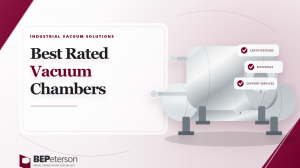
What Are the Best-Rated Vacuum Chamber Manufacturers?
Quick answer BEPeterson builds custom HV/UHV vacuum chambers to spec with ASME/ISO 9001 quality, verified helium‑leak performance, and complete documentation. Options include multiple stainless thicknesses
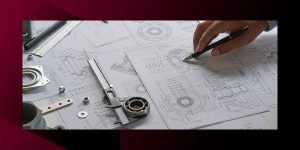
A Comprehensive Guide to Choosing a Custom Fabricator for Defense Projects
Quick answer For custom defense projects, choose a fabricator with JCP eligibility and mature quality systems (ISO 9001/AS9100, ASME Section VIII U‑stamp, NAVSEA weld quals where
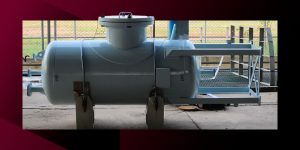
What Is the Average Cost of Custom Pressure Vessels?
Quick answer Custom vessel pricing depends on materials/alloys and wall thickness (driven by pressure/temperature), required code compliance (e.g., ASME stamp, third‑party inspection, documentation), and fabrication

Why Should You Opt for Custom Metal Fabrication?
Quick answer Choose custom metal fabrication when you need parts built to exact dimensions, tolerances, and materials that fit‑for‑purpose and integrate cleanly with your system.
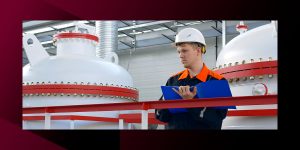
A Guide to Pressure Vessel Inspection and Maintenance
Quick answer A solid pressure‑vessel program schedules external and internal inspections, applies targeted NDE (UT, RT, PT, MT), and performs periodic proof tests—hydrostatic preferred; pneumatic
Why CRN Is Required?
Quick answer A CRN (Canadian Registration Number) is the provincial/territorial design registration required to install and operate pressure equipment (vessels, boilers, fittings) in Canada—separate from
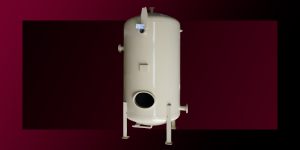
Safety Tips for Storage & Handling of Anhydrous Ammonia
Quick answer Safe storage and handling of anhydrous ammonia require pressure‑rated tanks (typically ≥250 psi) in compatible, non‑corrosive materials; tight transfer setups; and trained personnel
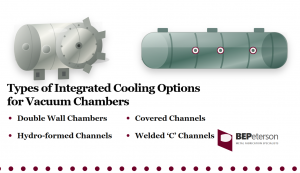
What are the Different Types of Water Cooling Options for Vacuum Chambers?
Quick answerThe main water‑cooling options for vacuum chambers are Double‑Wall (Jacketed), Covered/Machined Channels, Welded C‑Channels, and Hydro‑Formed Channels. Choose by heat load and budget: double‑wall

Understanding Different Types of Welding Processes and Techniques
Quick answer GMAW/MIG for high‑speed productivity on thin to medium sections, GTAW/TIG for precision, clean welds on stainless, aluminum, and exotic alloys, FCAW for high‑deposition