
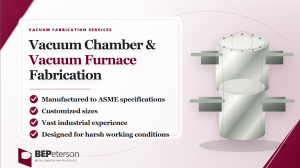
5 Reasons why you should go for BEPeterson’s Vacuum Chamber & Vacuum Furnace Fabrication services
Quick answer Choose BEPeterson for vacuum chamber/furnace fabrication when you need a one‑stop, custom build from design through assembly, backed by ASME‑compliant engineering and documentation.
How BEPeterson Provides Impeccable Solutions for the Power and Utility Industry
Quick answer BEPeterson supports power and utility operators with ASME‑ and ISO‑certified custom fabrication—pressure vessels, boiler/emissions hardware (low‑NOx burners, SOFA wind boxes, dampers, cyclones), co‑gen

Things to Know About Vacuum Chambers and Furnaces
Quick answer A vacuum chamber is a sealed metal enclosure evacuated by pumps to create controlled low/ultra‑low pressure for testing or processing, with ports/feedthroughs, gauges,
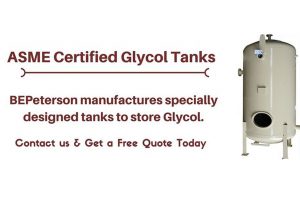
Why BEPeterson is the Leading Provider of Ethylene Glycol ASME Tanks
Quick answer BEPeterson is a leading source for ethylene‑glycol ASME tanks because we build custom, code‑stamped vessels to ASME Section VIII in an ISO 9001 facility
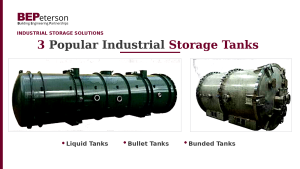
3 Popular Industrial Storage Tanks Discussed
Quick answer Three common industrial storage tank types are Liquid Tanks (e.g., glycol and anhydrous ammonia) built in carbon or stainless to ASME Section VIII,
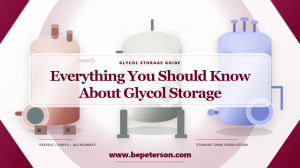
Everything You Should Know About Glycol Storage
Quick answerSafe glycol storage starts with the fluid type—propylene glycol (non‑toxic) vs ethylene glycol (toxic)—then pairs it with a compatible tank in carbon or stainless
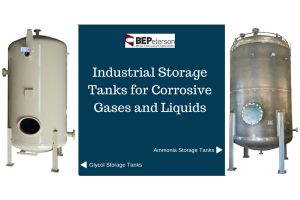
Common Types of Industrial Storage Tanks for Corrosive Gases and Liquids
Quick answer For corrosive media, the page highlights ASME‑compliant ammonia tanks (stainless steel, high‑pressure with internal/excess‑flow safety valves) and glycol tanks in carbon or stainless
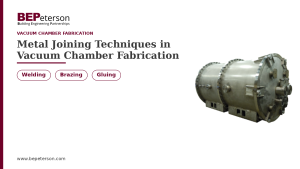
3 Commonly Utilized Metal Joining Techniques in Vacuum Chamber Fabrication
Quick answer The three common joining techniques in vacuum‑chamber fabrication are TIG (GTAW) welding for permanent, leak‑tight structural joints; brazing (torch/furnace/induction) for strong, ductile metal‑to‑metal
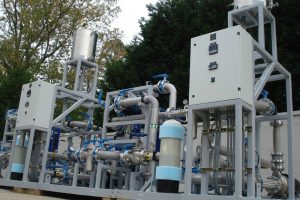
When You Need a Skid Assembly
Quick answer A skid assembly is a pre‑engineered, modular system that mounts vessels, pumps, piping, valves, and controls on a single steel frame—pre‑piped, pre‑wired, and
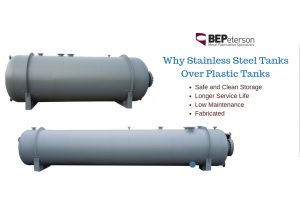
Why Stainless Steel Water Tanks are Preferred over Plastic Tanks?
Quick answer Stainless steel water tanks are preferred over plastic because they deliver clean, hygienic storage (resist algae growth), much greater durability and impact/fire resistance,
9 Benefits of Stainless Steel Tanks & Vessels
Quick answerStainless steel water tanks are popular because they offer superior corrosion resistance, exceptional durability/longevity, and hygienic, easy‑to‑clean interiors. They are recyclable/sustainable, maintain a clean
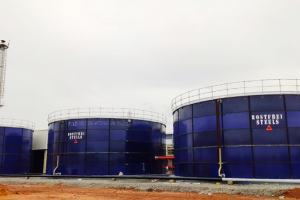
Things You Need to Know About Water Storage Systems for Fire Prevention
Quick answer Fire‑protection water storage tanks provide a dedicated, code‑compliant supply for sprinklers and hydrants—delivering the required flow and duration when municipal pressure is low,