Vacuum Chambers

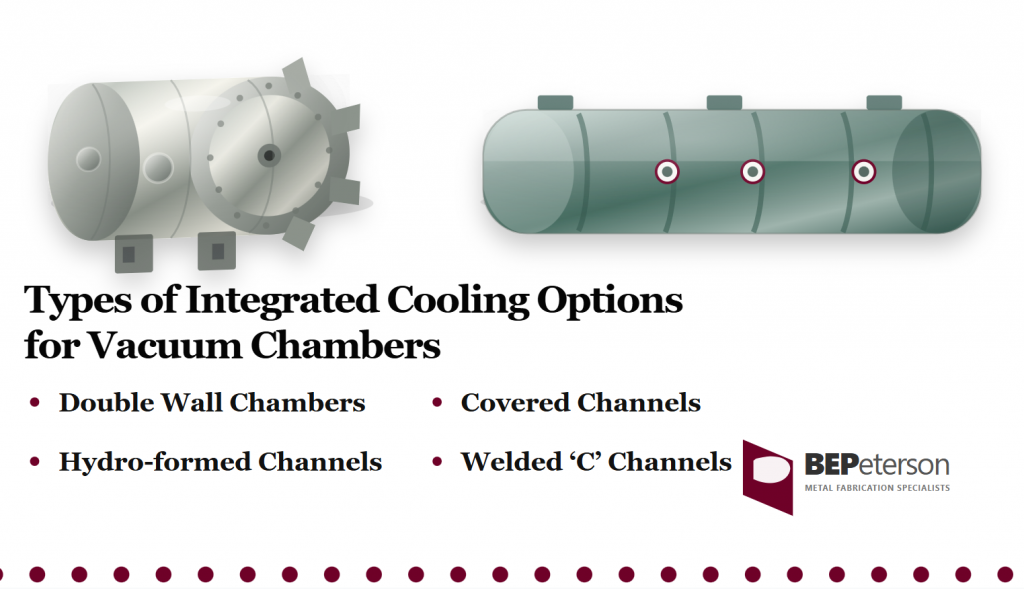
What are the Different Types of Water Cooling Options for Vacuum Chambers?

Quick answerThe main water‑cooling options for vacuum chambers are Double‑Wall (Jacketed), Covered/Machined Channels, Welded C‑Channels, and Hydro‑Formed Channels. Choose by heat load and budget: double‑wall handles the highest loads and temperatures; hydro‑formed offers strong, cost‑efficient coverage for moderate–high loads; covered channels target localized, lower loads; welded C‑channels are the most economical for low heat duties. […]

What are the Different Types of Water Cooling Options for Vacuum Chambers? Read More »
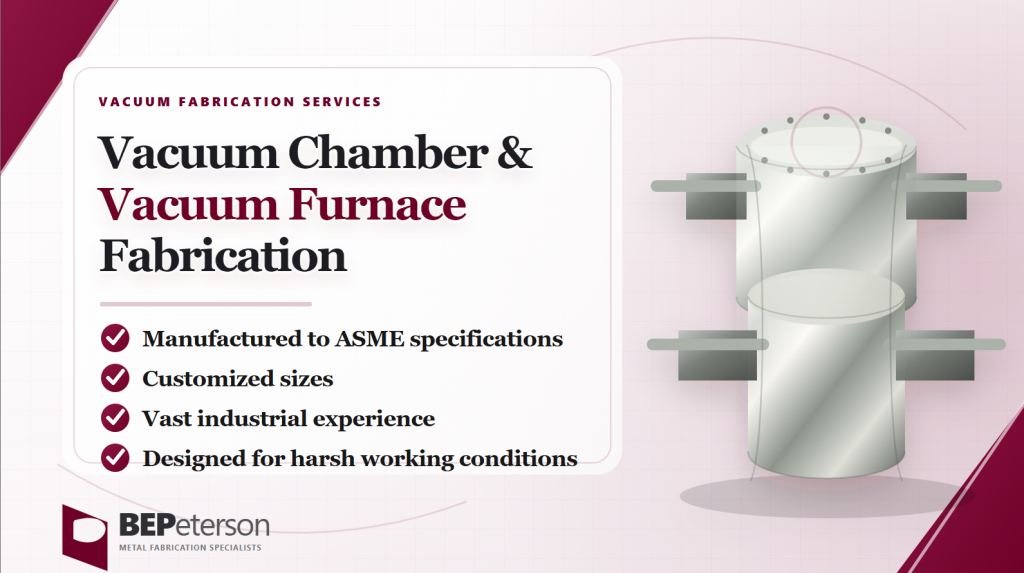
5 Reasons why you should go for BEPeterson’s Vacuum Chamber & Vacuum Furnace Fabrication services

Quick answer Choose BEPeterson for vacuum chamber/furnace fabrication when you need a one‑stop, custom build from design through assembly, backed by ASME‑compliant engineering and documentation. We tailor sizes and features for HV/UHV service using 300‑series stainless for corrosion and high‑temperature performance, and bring deep cross‑industry experience (physics, semiconductor, medical, defense) to deliver precise, production‑ready hardware.

5 Reasons why you should go for BEPeterson’s Vacuum Chamber & Vacuum Furnace Fabrication services Read More »

Things to Know About Vacuum Chambers and Furnaces

Quick answer A vacuum chamber is a sealed metal enclosure evacuated by pumps to create controlled low/ultra‑low pressure for testing or processing, with ports/feedthroughs, gauges, and thermal control to limit contamination and oxidation. A vacuum furnace is a heat‑treatment system built around a vacuum chamber that adds insulated hot‑zones, heating elements, precise temperature control, and

Things to Know About Vacuum Chambers and Furnaces Read More »

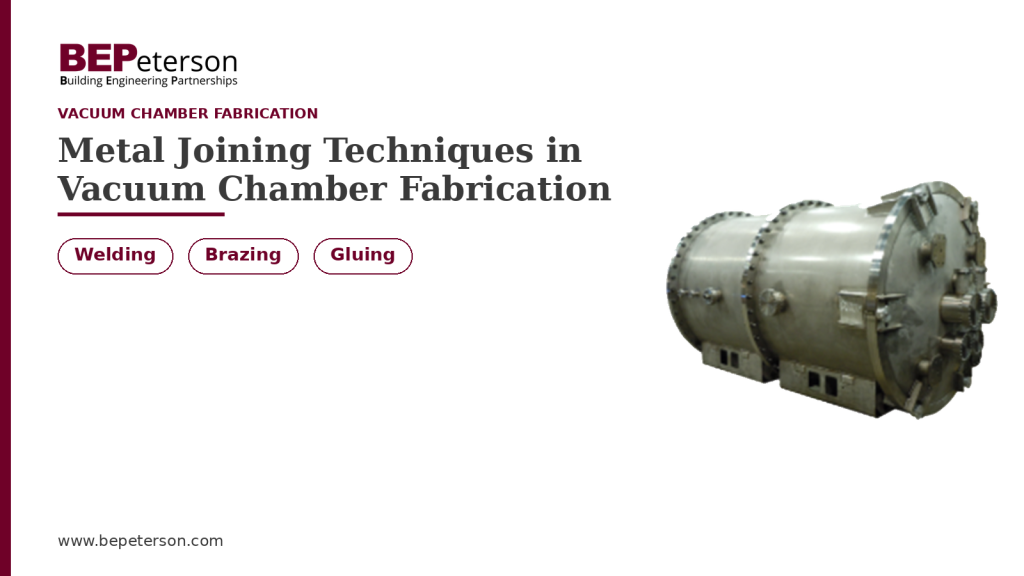
3 Commonly Utilized Metal Joining Techniques in Vacuum Chamber Fabrication

Quick answer The three common joining techniques in vacuum‑chamber fabrication are TIG (GTAW) welding for permanent, leak‑tight structural joints; brazing (torch/furnace/induction) for strong, ductile metal‑to‑metal bonds without melting the base metals—useful with dissimilar alloys and complex geometries; and high‑performance epoxy bonding to mount components or secure hardware where heat input from welding is impractical. Choose

3 Commonly Utilized Metal Joining Techniques in Vacuum Chamber Fabrication Read More »